Most people use dental exams and cleanings interchangeably, but they’re actually two different things that usually occur on the same visit. One is diagnostic. The other is a physical removal of plaque and tartar. Mixing them up isn’t a big deal day-to-day, but understanding the difference makes it a lot easier to know what to expect at your next dental checkup, how long to block off on your calendar, and roughly what you’re paying for.
This guide walks through what a dental exam actually involves, step by step, the different types of cleanings and their benefits, what it typically costs, and how to prepare so your next visit goes smoothly.
What Is a Dental Exam? (And Is It the Same as a Dental Checkup?)
A dental exam is the dentist’s diagnostic assessment of your teeth, gums, bite, and soft tissue, separate from the cleaning itself. It helps find potential problems like tooth decay, gum disease, and other health issues early.
The dental exam is highly beneficial for catching cavities, preventing small issues from turning into painful problems, and keeping your overall health in check.
The American Dental Association (ADA) recognizes two official types of exam:
- Overall oral exam
- Periodic oral exam
Which one you get depends on whether you’re a new patient or a returning one, and how long it’s been since your last full evaluation.
Dental Exam vs. Periodic Dental Exam
These aren’t interchangeable terms; they describe two different levels of evaluation, and knowing which one you’re scheduled for sets clearer expectations for the visit.
| Oral Exam | Periodic Oral Exam | |
| What it covers | Extensive evaluation of all extraoral, intraoral, and soft tissues | Check for changes since your last exam |
| Who it’s for | New patients, first visit | Established, returning patients |
| How often | Roughly every three years | At each recall visit |
Oral Exam
This is the deep-dive version, a full evaluation and recording of everything from your bite alignment to your soft tissue health. The ADA recommends it for new patients at their first visit, and then again roughly every 3 years thereafter, even for patients who’ve been seeing the same dentist regularly.
The idea is that a full reassessment periodically catches anything that’s shifted gradually enough to go unnoticed at routine visits, changes in bite, bone structure, or soft tissue that build slowly over years rather than showing up suddenly.
Periodic Oral Exam
This is what most returning patients get at each regular visit, sometimes called a periodic oral evaluation in dental billing and insurance paperwork, though it refers to the same appointment.
Rather than starting from scratch, the dentist checks for any changes in your dental and overall health status since your last periodic evaluation, new decay, shifts in gum health, or anything that’s changed since you were last seen. It’s shorter than a dental exam by design, since it’s building on a baseline that’s already been established.
Dental Exam vs Cleaning: What’s the Difference?
Exam = diagnostic. The dentist checks for decay, gum disease, bite problems, and signs of oral cancer.
Cleaning = physical removal of plaque and tartar, typically performed by a hygienist rather than the dentist.
Most patients get both in the same visit, which is exactly why so many people search for dental exams and teeth cleaning as a single combined term rather than two separate ones. But they’re distinct parts of the appointment, performed by different members of the dental team, each serving a different purpose. The exam identifies what’s going on. The cleaning addresses buildup that a toothbrush and floss can’t fully remove on their own.
What Happens During a Dental Exam? Step by Step
If you’re wondering what a dental exam consists of, here’s the general sequence most dental exams follow, though your dentist may adjust the order based on what’s most relevant to you:
- Health History Review: Any new symptoms, medications, or changes since your last visit. This step matters more than most patients realize, since certain medications and health conditions can directly affect your gum health, healing, or risk for decay.
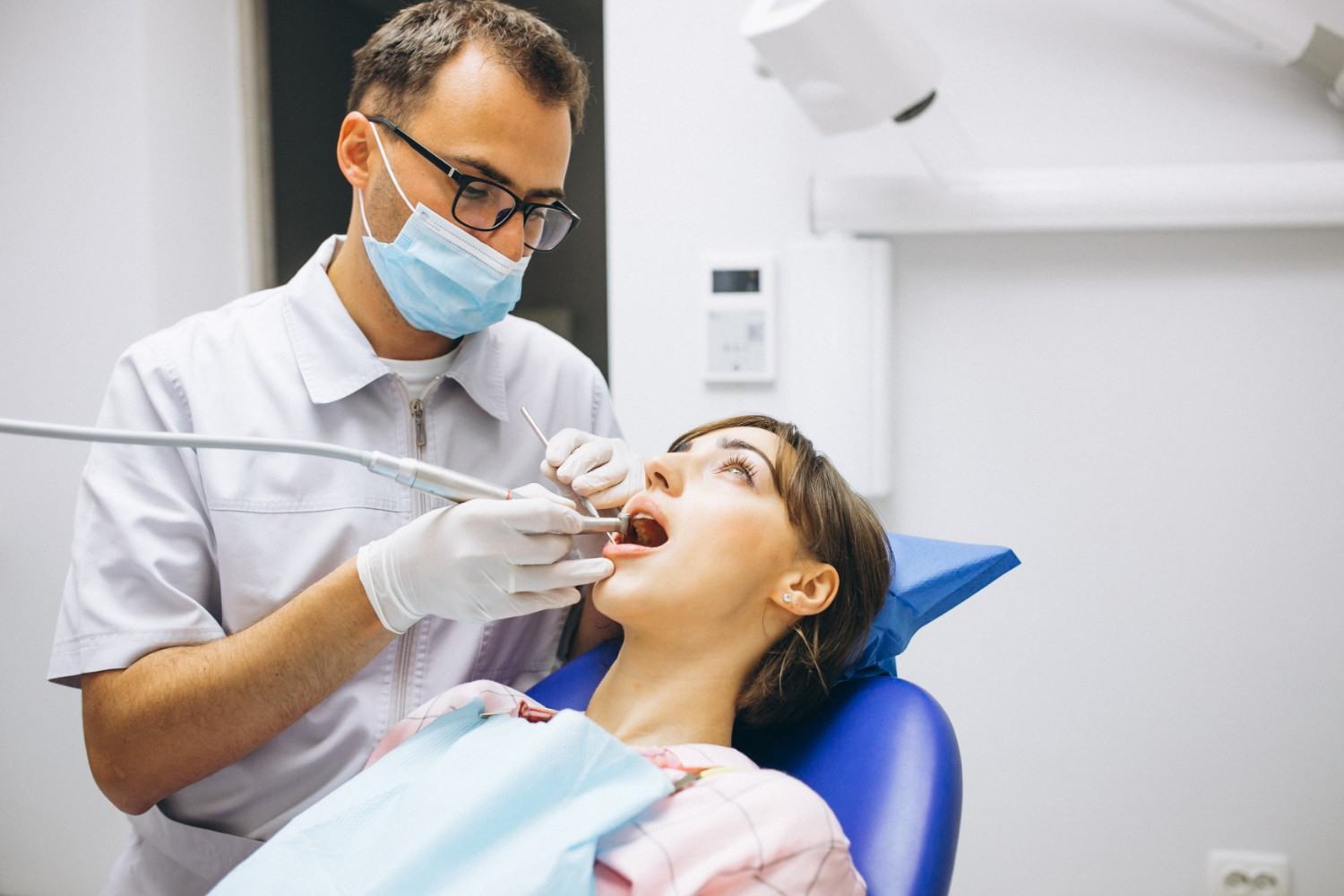
- Tooth-by-tooth Check: A visual and tactile examination for decay, cracks, or worn fillings. The dentist uses a small mirror and a fine metal instrument to check each tooth surface individually, including areas that are hard to see or feel with a toothbrush alone.
- Periodontal (gum) Evaluation: Checking gum pocket depth and looking for signs of gum disease. A small measuring instrument is used to check the space between your gums and teeth at several points around each tooth; deeper pockets can be an early sign of gum disease before it’s otherwise noticeable.
- Oral Cancer and Soft-tissue Screening: A check of the cheeks, tongue, throat, and floor of the mouth for anything unusual. This step is quick and painless, but it’s one of the most important parts of the exam, since early detection makes a significant difference in treatment outcomes.
- Digital X-Rays: When needed, to see between teeth and below the gumline. Smile and Shine Dental uses digital X-ray technology, which produces images with a fraction of the radiation exposure of older film-based systems, and results are available for review within seconds rather than requiring separate film development.
- Cleaning and Polishing: If scheduled during the same visit, typically performed by a hygienist after the dentist’s evaluation is complete.
- After Care Instructions: What the dentist saw, any areas to keep an eye on, and any recommended next steps, whether that’s a filling, a follow-up visit, or simply confirmation that everything looks healthy.
Note: Not every exam includes every step above. X-rays, for instance, aren’t taken at every single visit; your dentist will determine when they’re actually needed based on your history and risk level, not on a fixed schedule.
Oral Health Screening: What Your Dentist Is Looking For
Every step above exists to catch one of four things early, before it becomes a bigger (and more expensive) problem:
- Tooth Decay: Cavities forming below the surface, sometimes before they’re visible or painful. Caught early, decay is often treatable with a simple filling; caught late, it can mean a root canal or extraction.
- Gum Disease: Inflammation or infection that, left unaddressed, can affect the bone supporting your teeth. Early-stage gum disease (gingivitis) is reversible with better care and professional cleaning; advanced stages are not.
- Bite and Alignment Issues: Problems that can lead to uneven wear, jaw discomfort, or headaches over time. These often develop gradually enough that patients don’t notice until a dentist points out the pattern.
- Oral Cancer: Early-stage changes in the mouth, tongue, or throat that are far more treatable when caught early. This screening only takes a minute or two, but it’s one of the most valuable parts of any exam.
Every individual step maps back to one of these four categories, which is also why skipping exams for a few years tends to be riskier than skipping cleanings alone. A lot can develop quietly in that time without ever causing pain or an obvious symptom you’d notice on your own.
Types of Dental Cleanings
Since most exams include a cleaning in the same visit, it helps to know that dental cleaning isn’t one single service either. Which type you need depends on the current condition of your teeth and gums.
| Type | What It Involves | Who It’s For |
| Routine (Prophylaxis) Cleaning | Removes plaque, tartar, and surface stains using specialized instruments, followed by polishing | Patients with healthy gums and no signs of gum disease |
| Deep Cleaning (Scaling & Root Planing) | Removes plaque and tartar from below the gumline, at the tooth root, then smooths the root surface to help gums reattach | Patients with early to moderate gum disease |
| Periodontal Maintenance Cleaning | An ongoing, more frequent cleaning schedule following deep cleaning or gum disease treatment | Patients with a history of gum disease, to help keep it from progressing |
Routine Cleaning
This is the standard cleaning most people picture, appropriate for teeth and gums that are already in good condition. The hygienist removes plaque and tartar from the tooth surfaces, then polishes everything smooth. It’s typically quick, comfortable, and pairs directly with a periodic exam.
Deep Cleaning
Deep cleaning goes further, targeting bacteria and buildup that have worked their way below the gumline. Left untreated, that buildup can lead to gum disease and, eventually, bone loss around the teeth. Deep cleaning addresses the problem at the root, literally, and often takes more than one visit depending on how much of the mouth needs treatment.
Periodontal Maintenance
For patients who’ve already been treated for gum disease, periodontal maintenance helps prevent things from slipping backward. It’s typically scheduled more often than a standard twice-yearly cleaning, since gum disease requires closer, ongoing monitoring to stay under control.
What to Expect at a Dental Cleaning Appointment
Knowing the general flow ahead of time makes the whole visit feel far less clinical and unfamiliar.
- A quick review with the hygienist about any changes since your last visit, new sensitivity, bleeding gums, or anything else worth flagging.
- Plaque and tartar removal, using a hand instrument called a scaler or, often, an ultrasonic tool that uses vibration and water to break up buildup more efficiently.
- Flossing, to clear anything left between teeth that the scaler didn’t fully reach.
- Polishing, using a gritty paste and a spinning tool to smooth the tooth surface and remove remaining surface stains.
- A fluoride treatment, if included, to help strengthen enamel; this step is optional and often more common for pediatric or higher-risk patients.
- A final check-in with the hygienist or dentist about anything noticed during the cleaning.
Benefits of Regular Dental Cleaning
Cleanings aren’t just cosmetic maintenance; they play a direct role in preventing more serious (and more expensive) problems down the line.
- Prevents cavities by removing the plaque and bacteria that cause tooth decay before it has a chance to take hold
- Prevents gum disease by clearing buildup below the gumline that a toothbrush and floss can’t fully reach on their own
- Freshens breath by removing the bacteria most often responsible for persistent bad breath
- Removes surface stains, leaving teeth visibly brighter without any whitening treatment involved
- Catches small problems early, since the hygienist and dentist get a close, hands-on look at your mouth that’s easy to miss during daily brushing
- Supports whole-body health, since gum health has been linked in research to broader health factors, one more reason consistent cleanings matter beyond your smile alone
None of these benefits require anything dramatic on your part; just showing up consistently, generally twice a year, is what makes the difference over time.
How Long Does a Dental Exam Take?
A periodic exam with cleaning typically runs 30 to 60 minutes. A first-visit exam usually takes the full appointment slot, since it covers considerably more ground: full-mouth evaluation, X-rays if needed, and a more detailed conversation about your dental history.
If you’re booking your first visit, it’s worth planning for a slightly longer appointment than you might expect from a routine cleaning alone.
How Much Is a Dental Exam?
Cost varies based on a few factors:
- Exam type: A thorough exam generally costs more than a periodic one, since it covers more ground and takes longer to complete
- Whether X-rays are needed, and if so, how many, since a full-mouth series costs more than a couple of targeted images
- Insurance coverage, which can significantly change your out-of-pocket cost; many PPO plans cover routine exams at little to no cost to the patient, though coverage details vary by plan
New-patient exams are usually priced differently than a returning patient’s periodic exam, since the first visit involves a more thorough evaluation and typically includes X-rays to establish a baseline.
Dental cleaning in Suwanee and Lilburn, GA, costs between $50 and $150 without insurance. If you need a complete preventive visit that includes an exam, a standard cleaning, and X-rays, the total out-of-pocket cost usually ranges from $150 to $350.
Smile and Shine Dental accepts major PPO insurance plans, and the $99 new-patient special bundles a consultation, dental exam, and X-rays into a single visit, worth asking about if you’re due for a first appointment.
For patients without insurance, an in-house membership plan is also available at both locations, making routine care more predictable without a traditional insurance policy.
How Often Should You Get a Dental Exam?
The ADA recommends that visit intervals be set by your dentist based on your individual oral health risk, rather than a single blanket rule for everyone. That said, most patients with healthy teeth and gums land on a twice-yearly schedule.
If you want the full breakdown of how visit frequency is determined and why it varies from person to person, that’s covered in more depth in our post on how often you should get your teeth cleaned.
How to Prepare for Your Dental Exam
A few small steps make the visit smoother for everyone:
- Bring a list of current medications and note any new symptoms since your last visit
- Bring insurance information, especially for new-patient visits
- Arrive a few minutes early to complete any necessary paperwork before your appointment time
Ready to Schedule Your Exam?
Whether it’s your first visit or a routine recall, knowing what to expect tends to take a lot of the anxiety out of sitting in the chair. Smile and Shine Dental offers periodic exams at our Suwanee and Lilburn offices, with same-day appointments available for patients who need to be seen quickly.
Suwanee, GA: (470) 508-0053 Lilburn, GA: (770) 806-9090
Reach out to either office to book your next dental exam, or ask about our current new-patient offer if it’s been a while since your last visit.
FAQs
Q1. What is the difference between a dental exam and a dental cleaning?
A dental exam is the dentist’s diagnostic check of your teeth, gums, bite, and soft tissue. A cleaning is the removal of plaque and tartar buildup, usually done by a hygienist. Most patients receive both during the same visit.
Q2. What is a dental checkup?
A dental checkup is another name for a dental exam, the dentist’s diagnostic assessment of your teeth, gums, bite, and soft tissue, separate from the cleaning.
Q3. What does a dental exam consist of?
A health history review, tooth-by-tooth check, gum evaluation, oral cancer screening, X-rays if needed, cleaning, and a summary of findings.
Q4. What is a dental exam?
A dental exam is an in-depth evaluation of all extraoral, intraoral, and soft tissues. The ADA recommends it for new patients on their first visit and then roughly every three years.
How long does a dental exam take?
A periodic exam with cleaning typically takes 30 to 60 minutes. A first-visit exam usually takes the full appointment since it covers more ground.
Q5. How much is a dental exam?
Cost depends on the type of exam, whether X-rays are needed, and your insurance coverage. Call the office for a current estimate specific to your plan.
Q6. How much is a new patient dental exam?
At Smile and Shine Dental, new patients can start with the $99 special, which bundles a consultation, exam, and X-rays into one visit.
Q7. How often should I get a dental exam?
The ADA recommends that your dentist set the visit frequency based on your individual oral health risk. Most patients with healthy teeth and gums are seen twice a year.